
When the game first pops up from the screen: ZIMO M1 Light Field 3D, a new era for players' desktops
Every hardcore player's Steam library has a few masterpieces that they can't bear to delete even though they've cleared the level. You thought those familiar scenes, moves, and storylines were already familiar to you — until the moment you re-open them on ZIMO M1. The character “walks” out of the screen, and the arc of the weapon's wreck has real depth. The mountains clearly spread out at the end of the field of view, and even the small UI characters are sharp and within reach. This is not a virtual world closed in a VR headset, nor is it an illusion of cheap red and blue glasses. Instead, sit in front of a familiar computer desk and see through a deep “window” the game should look like.
This is the light-field 3D gaming experience brought by ZONDISION Deep Vision. And what really makes this set of experiences move from “usable” to “easy to use” and grow from a single device to a complete ecosystem is the ZimoHub software community. Currently, domestic players can go to https://zimohub.com/zh下载体验,抢先解锁光场游戏的全新玩法.
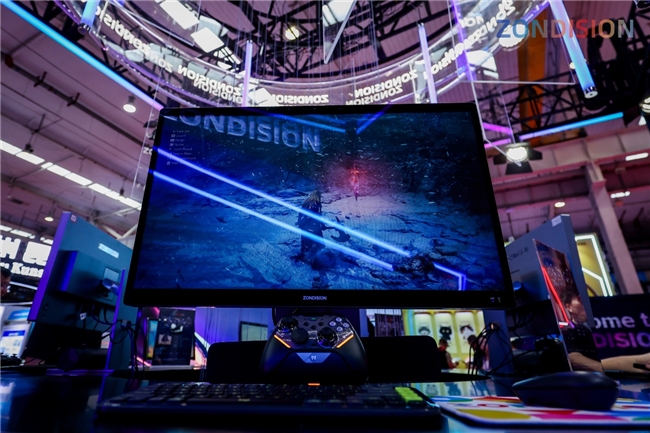 In response to the needs of different players, Zimohub has built a three-tier LFD adaptation system:
Community LFD is a zero-threshold choice for newbies. All presets are shared by the player community, and no debugging is required. It is completely free to play popular games such as “God of War” and “Black Myth: Goku”. The community co-creation model allows the content pool to continue to grow on its own, and players will soon share mature configurations when new games are launched.
Master LFD is the core choice of the Picture Quality Party. Based on ReShade+Shift3D rendering pipeline level technology, it directly penetrates deep into the bottom layer of the game to generate real depth, rather than pseudo-3D simulated by later algorithms, completely solving common problems in industries such as edge ghosting and text ghosting. It supports customization of six-dimensional parameters such as three-dimensional depth, screen distance, and parallax intensity. FPS competitions can reduce depth to ensure accurate targeting, and open world games can fill the screen to enhance immersion, and truly achieve “one game brings out 100 kinds of experiences”.
The Geo-11 open source solution is aimed at technical players. Based on the DX11 dual camera rendering principle, it is universally compatible with most DX11 games. The parameters are freely adjustable and completely open source, making it suitable for players to polish exclusive light field effects.
We tested six different types of benchmark titles, including “Kazan,” “Lost,” and “Black Myth: Goku.” The action game's moves are deep and realistic, and the evasion is more intuitive; the atmosphere envelops the work space and doubles the sense of immersion; the pixel-style RPG also shows a delicate texture like a three-dimensional sandboard. Even the UI and subtitles are sharp and clear, and there are no virtual shadows problems with traditional 3D light.
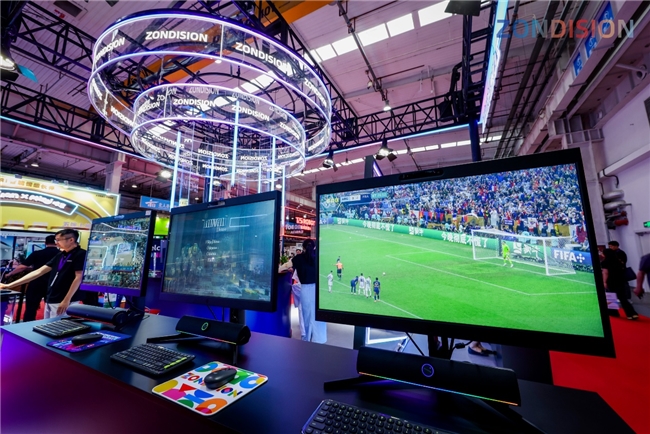 Developer Co-Creation Program: Building a Light Field Ecosystem That Continues to Grow
The vitality of the light field experience has never been limited to official content, but also to an open creator ecosystem. ZONDISION has fully launched a developer support program, providing full link support for open computing power, exclusive engines, token incentives and commercial connectivity, and inviting developers from around the world to jointly build a light-field 3D content ecosystem.
For professional game developers, ZIMO M1 provides SDK support covering all platforms such as Unity, UE, C++, and Window Native. It is natively compatible with OpenXR standards, greatly reducing the creative threshold. The official plan is to officially release a game transformation engine for professional developers at PAX in Seattle in September 2026. It supports 3D optical conversion of mainstream engines such as UE, Unity, and RedEngine, and will be open to developers free of charge.
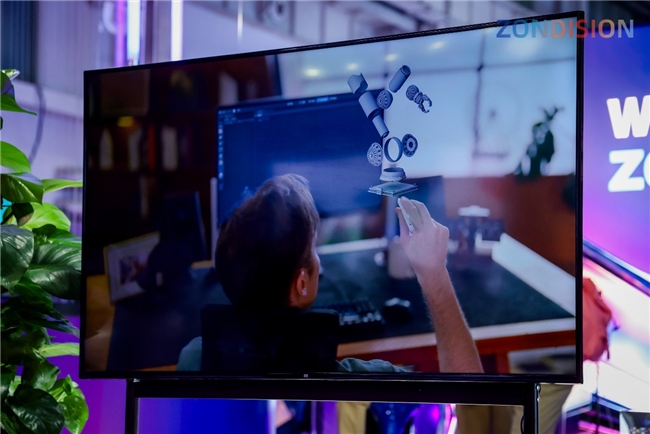
For independent creators and technical players, the Geo-11 open source solution provides a space for free exploration. Players can independently adjust game lighting effects and share them with the community. High-quality content also has the opportunity to receive official incentives and commercialization. The field of pan-content is also open. AI-driven 2D to 3D tools support real-time stereoscopic conversion of images and videos, covering diverse scenarios such as images and events. AI, CAD, education, medical care, etc. can all be developed twice based on underlying technology.
For players, buying not only a device that is easy to use today, but also a light field ecosystem that will continue to evolve and expand. Every player who loves to create can become an ecosystem builder.
 Full-stack self-developed hardware to establish a solid foundation for the ecological experience
The upper limit of the software experience is always determined by the hardware base. As the world's first consumer-grade optical field 3D display that supports interaction, ZIMO M1 has solved the pain points of the light field 3D industry from the root with four core technology breakthroughs.
Liquid crystal grating dynamic control technology realizes true 2D/3D lossless switching. In 2D mode, the grating is almost completely transparent, with zero resolution loss, zero brightness attenuation, and zero screen effect. Daily office drama tracking is no different from ordinary high-end displays; in 3D mode, the light separation angle is accurate and controllable at the millisecond level. The technology has completed the global patent layout, and it is also the core support for the ZIMO M1 as the main display.
The self-developed 3D ASIC chip independently undertakes all the processing of 4K 3D rendering, eye tracking correction, and parallax synthesis, and does not consume the host's graphics card resources at all. The measured mid-range video card can run 4K light field games smoothly. The frame rate is almost no different from pure 2D mode, and there is no need to upgrade 10,000 yuan hardware for 3D effects, greatly lowering the entry threshold for players.
120Hz professional binocular tracking system with pupil positioning delay of less than 10ms and crosstalk rate of less than 1.5%, reaching the lowest level in the industry. Wearing glasses does not affect use. The viewing angle changes smoothly without ghosting. Playing continuously for three hours only causes normal eye fatigue. It completely eliminates the common problem of “being dizzy for 40 minutes” of early light field devices, and supports dual-mode switching between single immersion and multi-person viewing.
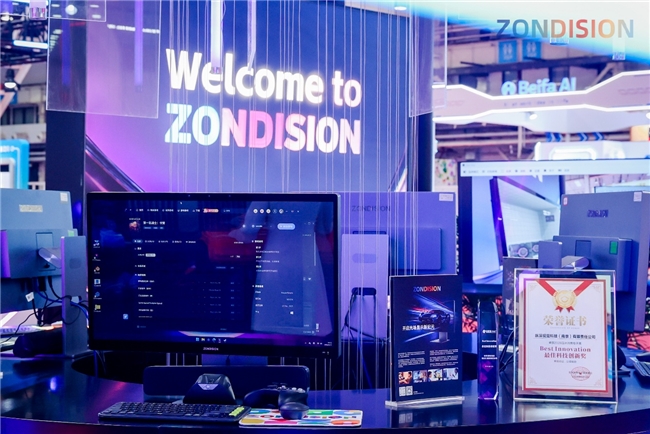
Hard power has been proven in the global market. ZIMO M1 landed on Kickstarter in April of this year, and was officially certified as “Project We Love” when it went live. In the end, the crowdfunding completion rate exceeded 2000%, covering more than 20 countries and regions around the world, and received special reports from leading overseas technology media such as Digital Trends. It was unveiled at CES Asia 2026 in June and won the “Best Technological Innovation Award” in one fell swoop. The CCTV Technology Frontier section rated it as “a landmark product in the transition of the display industry from 2D to 3D”.
 A closed loop of software and hardware opens a new era in the optical field 3D industry
Unlike VR headsets, the ZIMO M1 follows a desktop-level, unburdened experience route: VR closes people into the virtual world, making it easy to stun and press faces for a long time; ZIMO M1 opens a deep window on the desktop, and players can get up and return to reality at any time even after a long period of play. For core players, this unburdened experience is far more valuable than a simple parameter upgrade.
From ZimoHub community tools to ZiMO M1 consumer-grade hardware, from a mature developer system to a continuously expanded content pool, Deep Vision is building a complete closed loop of light-field 3D ecosystem — hardware priming, software empowerment, content growth, and developer co-creation. This is not an iteration of a single product; it is the prototype of a new industry. As display technology transitions from 2D planes to 3D light fields, it changes not only game images, but also the underlying logic of content creation, interactive design, and even the entire digital experience.
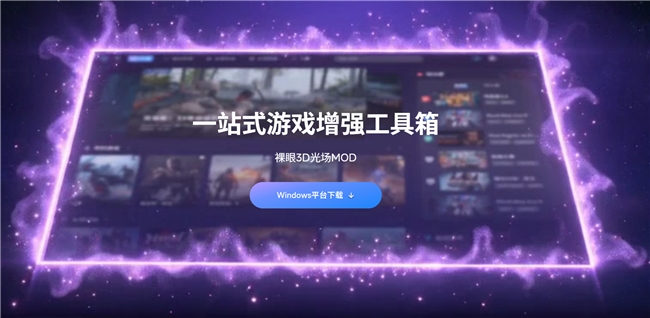 Currently, the ZIMO M1 domestic listing reservation channel is about to open. The initial price is about 15% lower than overseas, and the first 1,000 subscribers enjoy free content updates for life. Players can go to https://zimohub.com/zh to download ZimoHub and experience the charm of light field games in advance.
Lightfield 3D has finally bid farewell to the “gimmick demo machine” label and entered the era of practical, easy to use, and growing player desktops. This is just the beginning of a new era in the Lightfield industry.
Official Weibo: @全影网 https://weibo.com/7192com
Official WeChat: Want to get the latest news on your phone? Add Quanfilm's official WeChat account: www7192com
Some content, opinions, pictures, text, and videos on this site come from the Internet for everyone to learn and communicate. This site does not guarantee or promise the authenticity, completeness, or timeliness. If there is content on this site that infringes your copyright, copyright or portrait rights, please contact us (0536-8337192) and we will review and deal with it immediately.