The trade fair set up the “China Service” exhibition area for the first time —
See how “China Service” benefits the world
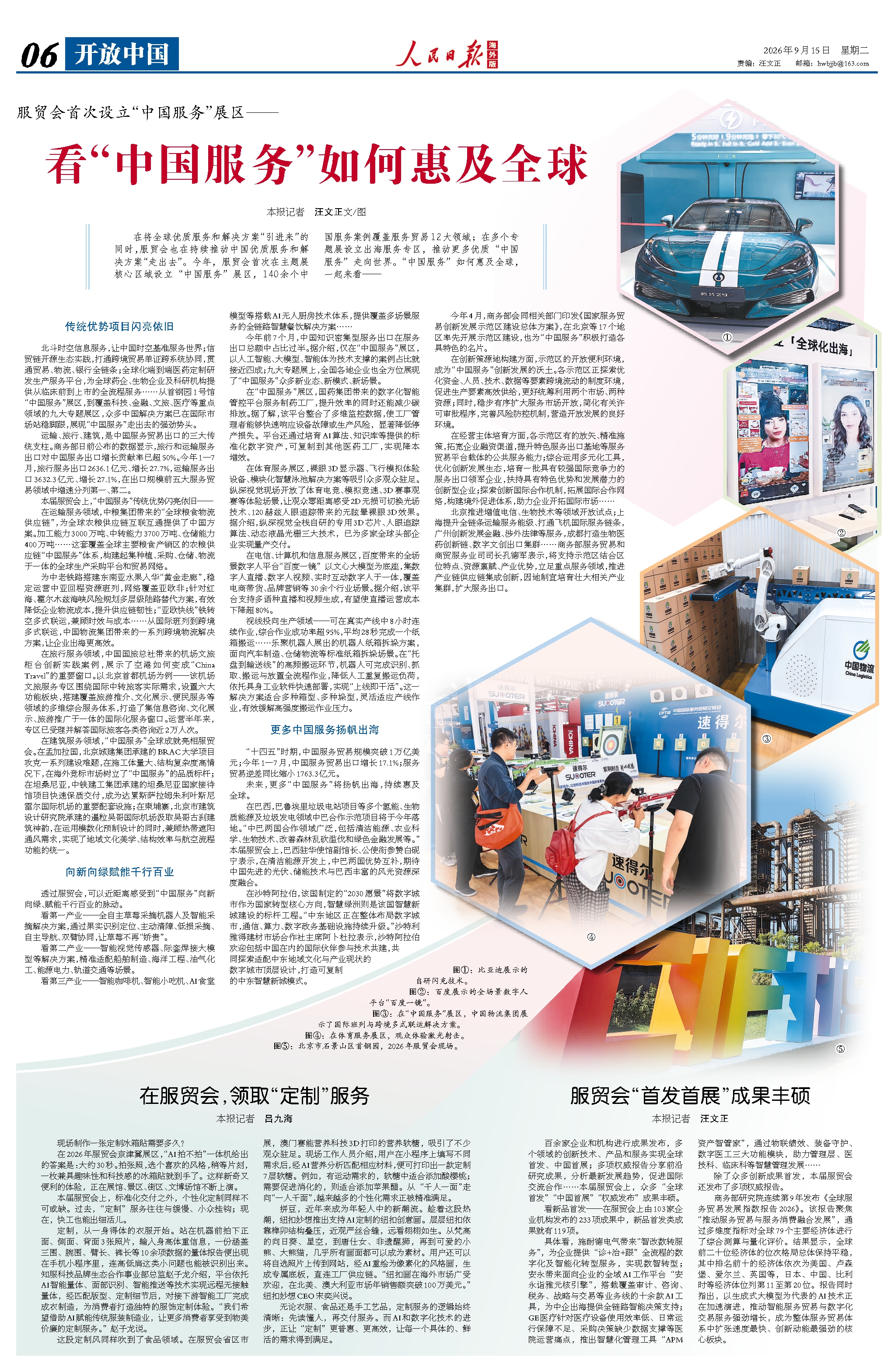
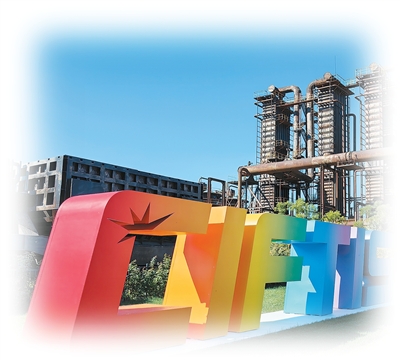 While “bringing in” high-quality services and solutions from around the world, the trade fair also continues to promote China's high-quality services and solutions to “go global”. This year, for the first time, the trade fair set up a “China Service” exhibition area in the core area of the theme exhibition. More than 140 Chinese service cases covered 12 major areas of trade in services; overseas service zones were set up at various special exhibitions to promote more high-quality “Chinese services” to the world. Let's take a look at how “China Service” benefits the world —
Traditional advantage projects are still shining
The Beidou spatio-temporal information service allows China's spatio-temporal benchmark to serve the world; open up cross-system collaboration of cross-border trade documents to connect the entire trade, logistics and banking chain; a global end-to-end pharmaceutical customized R&D and production service platform to provide global pharmaceutical companies, biotechnology companies and research institutions with full-process services from pre-clinical to marketing... From the “China Service” exhibition area in Hall 1 of Shougang Park to nine special exhibition areas covering key fields such as technology, finance, cultural tourism, and medical care, many Chinese solutions have gained a foothold in the international market, showing “China Service” Strong momentum going out.
Transportation, travel, and construction are the three traditional pillars of China's services trade exports. According to data recently released by the Ministry of Commerce, exports of travel and transportation services have contributed more than 50% to the growth of China's service exports. From January to July of this year, exports of travel services amounted to 263.61 billion yuan, an increase of 27.7%, and exports of transport services amounted to 363.23 billion yuan, an increase of 27.1%, ranking first and second in the growth rate among the top five service trade sectors.
At this year's trade fair, the traditional advantages of “China Service” are still shining brightly --
In the field of transportation services, the “Global Food Logistics Supply Chain” brought by the COFCO Group provides China's solution for connecting the global agri-food supply chain. Processing capacity of 30 million tons, transit capacity of 37 million tons, storage capacity of 4 million tons... This agricultural food supply chain “China Service” system covering the world's major grain production and marketing regions has built a global production and procurement platform and trade network integrating planting, procurement, warehousing, and logistics.
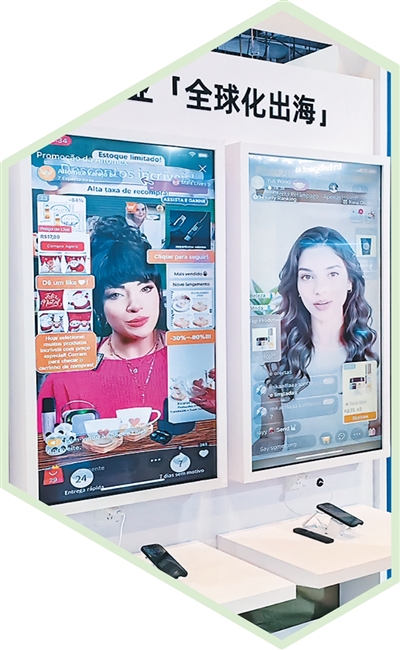
Build a “golden corridor” for the China-Laos Railway to stably operate return resource trains from Central Asia to China, and cover Asia, Europe and Africa; plan multi-level land alternatives for the Red Sea and the Strait of Hormuz risk to effectively reduce enterprise logistics costs and enhance supply chain resilience; “Asia Europe Express” rail-to-air multimodal transport, taking into account time efficiency and cost... From international trains to cross-border multimodal transport, China Logistics Group has brought a series of cross-border logistics solutions to make enterprises go overseas more efficiently.
In the field of travel services, the China National Travel Service brought an innovative practical example of airport cultural tourism counter, showing how the airport has become an important window for “China Travel.” Take Beijing Capital Airport as an example — the airport's cultural tourism service area has set up six major functional sections around the actual needs of international transit travelers, built a multi-dimensional integrated service system covering the fields of tourism promotion, cultural display, and convenience services, and created an international service window integrating information consultation, cultural display, and tourism promotion. In the past half year of operation, the section has received and answered nearly 20,000 inquiries from international travelers.
In the field of construction services, the global achievements of “China Service” were unveiled at the trade fair. In Bangladesh, the BRAC University project constructed by Beijing Urban Construction Group overcame a series of construction problems. Under the circumstances of large construction volume and high structural complexity, it set a quality benchmark for “China Service” in the overseas bidding market; in Tanzania, the Tanzania National Reception Hall project built by China Railway Construction Engineering Group was delivered quickly and qualitatively, and became an important supporting facility for Julius Nyerere International Airport in Dar es Salaam; in Cambodia, Siem Reap Angkor International Airport, built by the Beijing Institute of Architectural Design and Research, draws on the charm of Angkor ancient temple architecture, while using digital modular prefabrication design Balancing tropical shading Ventilation requirements unify regional cultural aesthetics, structural efficiency, and aviation process functions.
Empowering thousands of industries to be new and green
Through the trade fair, you can feel the pulse of “China Service” moving towards a new green direction and empowering thousands of industries up close.
Look at the primary industry - fully autonomous strawberry picking robots and intelligent picking solutions. Through fruit recognition and positioning, active obstacle cleaning, low-loss picking, autonomous navigation, and arm collaboration, strawberries are no longer “precious”.
Look at the secondary industry - solutions such as intelligent vision sensors and large welding models to accurately adapt to scenarios such as shipbuilding, marine engineering, oil and gas chemicals, energy and electricity, and rail transit.
Look at the tertiary sector - smart coffee machines, smart snack machines, AI cafeteria models, etc. are equipped with AI unmanned kitchen technology systems to provide full-link smart catering solutions covering multiple scenarios...
In the first seven months of this year, China's exports of knowledge-intensive services accounted for more than half of the total exports of services. According to reports, in the “China Service” exhibition area alone, the proportion of cases using artificial intelligence, large models, and intelligent devices as technical support is close to 40%; at nine special exhibitions, enterprises from all over the country also showcased a full range of new business formats, new models, and new scenarios of “China Service.”
In the “China Service” exhibition area, the digital intelligent control platform brought by Sinopharm Group serves pharmaceutical factories, improving efficiency while also reducing carbon emissions. According to our understanding, the platform integrates multi-dimensional monitoring data to enable factory managers to quickly respond to equipment failure or production risks, and significantly reduce production shutdown losses. The platform also fosters standardized digital assets provided by AI algorithms, knowledge bases, etc., which can be replicated to other pharmaceutical factories to reduce costs and increase efficiency.
In the sports service exhibition area, naked eye 3D displays, flight simulation experience equipment, modular smart pool solutions, etc. attracted many visitors. The in-depth visual scene opened up experiential scenes such as sports e-sports, simulated racing, and watching 3D events, allowing viewers to experience the dazzle-free 3D effects of 2D lossless switchable light field technology and 120 Hz human eye tracking at zero distance. According to reports, the three major technologies of dedicated 3D chips, eye tracking algorithms, and dynamic LCD grating developed by Zonshen Vision's full stack have been mass-produced and delivered to many of the world's leading companies.
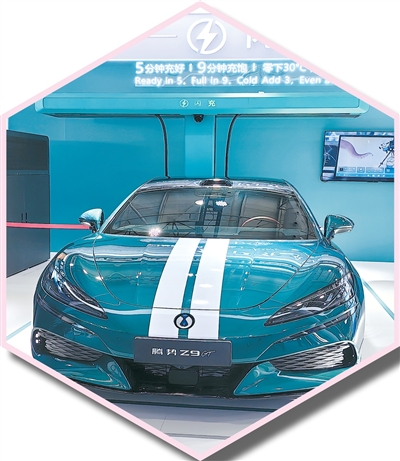
In the telecommunications, computer, and information service exhibition area, the full-scene digital human platform “Baidu One Mirror” brought by Baidu is based on the Wenxin Big Model, integrating digital live streaming, digital human video, and real-time interactive digital people, covering more than 30 industry scenarios such as e-commerce delivery and brand marketing. According to reports, the platform supports multi-language live streaming and video generation, which is expected to reduce live streaming operating costs by more than 80%.
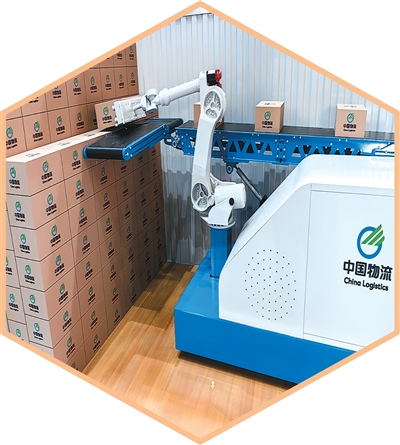
Focus on the production field — it can operate continuously for 8 hours in a real production line, with a comprehensive success rate of over 95%, and an average of 28 seconds to complete a carton handling... The robot carton unstacking solution exhibited by Leju Robot targets standard carton unstacking scenarios such as automobile manufacturing, warehousing and logistics. In the high-frequency handling process from the “tray to the conveyor line”, the robot can complete the entire process of identification, handling and placement, reduce repetitive manual handling loads, and rely on rapid deployment of customized industrial software to achieve “work as soon as it goes online”. This solution is suitable for various box types and various stacking types, adapts flexibly to production line operations, and effectively relieves the pressure of high-intensity handling operations.
During the “14th Five-Year Plan” period, the scale of China's trade in services exceeded 1 trillion US dollars; from January to July of this year, China's services trade exports increased by 17.1%; the trade in services deficit decreased by 176.33 billion yuan over the same period last year.
In the future, more “China Services” will sail overseas and continue to benefit the world.
In Brazil, several demonstration projects for cooperation between China and Brazil in the fields of hydrogen energy, biomass energy, and waste-to-energy generation, such as the Barueri waste-to-energy plant project, will be launched this year. “China and Brazil cooperate in a wide range of fields, including clean energy, agricultural science, biotechnology, improving deforestation, and developing green finance.” At this year's trade fair, Bai Yanning, Deputy Director and Minister Counsellor of the Brazilian Embassy in China, said that in clean energy development, China and Brazil complement each other's advantages and look forward to the deep integration of China's advanced photovoltaic and energy storage technology with Brazil's rich landscape resources.
In Saudi Arabia, the “Vision 2030” formulated by the country takes digital cities as the core direction of national transformation, and smart oases are a benchmark project for the country's smart new city construction. “The Middle East region is developing an overall digital city, and communication, computing power, and digital government infrastructure continue to be upgraded.” Abdullah, chairman of the Saudi Riyadh Building Materials Market Cooperative, said that Saudi Arabia welcomes international partners, including China, to participate in technical co-construction to jointly explore top-level digital city designs adapted to the current cultural and industrial situation in the Middle East region, and create a replicable smart city model in the Middle East.
In April of this year, the Ministry of Commerce, together with relevant departments, issued the “Overall Plan for the Construction of National Service Trade Innovation and Development Demonstration Zones”, pioneering the construction of demonstration zones in 17 regions including Beijing, and is also actively creating unique business cards for “China Service.”
In terms of building a source of innovative strategies, the open and convenient environment of the demonstration zone has become a fertile ground for “China Service” innovation and development. Various demonstration zones are exploring ways to optimize the institutional environment for the cross-border flow of capital, personnel, technology, data, etc., to promote the efficient supply of factors of production and make better integrated use of the two markets and resources; at the same time, they are steadily and orderly expanding the opening of service markets, simplifying relevant licensing and approval procedures, improving risk prevention and control mechanisms, and creating a favorable environment for open development.
In terms of cultivating business entities, each demonstration zone has targeted and precise measures to broaden enterprise financing channels and enhance the public service capabilities of service trade platform carriers such as characteristic service export bases; comprehensively use diversified tools to optimize the innovation and development ecosystem, cultivate a group of leading service export enterprises with strong international competitiveness, and support innovative enterprises with unique advantages and development potential; explore innovative international cooperation mechanisms, expand international cooperation networks, and establish overseas promotion systems to help enterprises explore international markets...
Beijing promotes open pilot projects in the fields of value-added telecommunications and biotechnology; Shanghai enhances the energy level of full-chain transportation services, opens up international aircraft service chains; Guangzhou innovates and develops financial and foreign-related legal services; Chengdu builds biomedical innovation chains, digital cultural and creative export clusters... Kong Dejun, director of the Department of Trade in Services, Trade and Trade Services of the Ministry of Commerce, said that it will support demonstration zones to combine location characteristics, resource endowments, and industrial advantages to promote industrial chain integration and innovation, cultivate and expand related industrial clusters according to local conditions, and expand service exports.